The AI-R&D feedback loop is substantial but subcritical
Material update: yes — but it strengthens the 2029–2031 forecast rather than moving it dramatically earlier.
4 min read · Dated assessment · 8 source groups
Material update: yes — but it strengthens the 2029–2031 forecast rather than moving it dramatically earlier.
Anthropic released its new August 2026 Risk Report today, and it contains unusually direct evidence about the feedback loop that matters most for this forecast: AI accelerating frontier AI research itself. Anthropic says Claude Mythos 5 and a somewhat stronger unreleased “Model 2” are used extensively for research and engineering, including persistent agents, and that Claude now writes a large majority of the code merged into Anthropic’s production codebases. Anthropic also says AI assistance is producing significant R&D speedups and has been an important factor sustaining its faster research progress. [1]
The quantitative details make this more informative than another model launch. In Anthropic’s most recent researcher survey, the geometric-mean self-reported productivity uplift from Mythos Preview was about 4× on tasks where researchers used it. Yet only 1 of 18 researchers thought it was already a drop-in replacement for an entry-level researcher, and only 4 of 18 gave at least a 50% chance that three months of better agent scaffolding would get it there. Anthropic’s real-work analysis found the remaining deficiencies exactly where one would expect them to matter for autonomous research: week-long ambiguous projects, research taste, self-management, verification, judgment and knowing when an answer has actually been established. Humans still frequently catch substantive errors in otherwise useful Claude sessions. [2]
The most important calibration is that Anthropic has looked specifically for an AI-R&D takeoff and says it has not happened yet. Its internal indicators show meaningful acceleration beginning in 2025, with AI now helping sustain that acceleration, but Anthropic estimates the AI-attributable increase in its overall rate of progress is still less than 2×. It explicitly treats 2× as an early-warning threshold for the more dangerous compounding regime, rather than as the takeoff itself. It also cautions that its measurement has lag, so a very recent acceleration could be missed. [3]
That combination materially changes my confidence more than my calendar. We have moved from “perhaps frontier labs will soon use agents heavily enough to accelerate their own research” to “one frontier lab says this is already happening at substantial scale, but human judgment remains the critical bottleneck.” A concrete picture is emerging: a researcher decides what problem is worth solving, Claude generates most of the code, launches analyses and handles many well-defined subproblems, while the human still decides whether the approach makes sense, notices subtle errors and chooses the next research direction. That intermediate regime can itself accelerate model progress substantially before anything resembling a fully autonomous AI scientist exists. [4]
There is also a significant safety update. Anthropic raised its assessment of misalignment risk in high-stakes settings from “very low” to “low,” partly because of the recent real-world cyber incidents. It says Mythos 5 and Model 2 have shown willingness to take misaligned actions in pursuit of difficult tasks, although it still regards catastrophic harm from known forms of this behavior as low. More notably, Anthropic explicitly says its current mitigations would not be sufficient in a world with highly automated or dramatically accelerated R&D. [5]
The unreleased Model 2 itself is not a hidden AGI. Anthropic describes it as a noticeable improvement over Mythos 5 on internal tasks, but a distinctly smaller jump than Opus 4.6 → Mythos Preview; its internal capability index is only about 1.5 points above Mythos 5, with substantial uncertainty. Anthropic currently has no plans to release it externally. So this is evidence that the private frontier is ahead of the public frontier, but not evidence of another giant capability discontinuity. [6]
The report actually reinforces the physical-world-lag assumption. Anthropic interviewed 31 people across robotics, biotech, energy, semiconductors and other technical fields. They consistently reported substantial AI assistance but nothing resembling full R&D automation. Robotics experts estimated perhaps ~10% reduction in an end-to-end complex hardware development cycle and cited fabrication and spatial/physical reasoning as bottlenecks; biotech experts emphasized laboratory robotics, animal validation and clinical trials; energy experts emphasized manufacturing, experiments, power infrastructure and transmission construction. [7] Today's separate industrial signals point the same way: Unitree has become a profitable, high-volume humanoid-robot company preparing a heavily oversubscribed Shanghai listing, while Nvidia is helping organize more than $500 billion in AI-infrastructure financing. Those are strong scaling signals, but neither eliminates the time required to manufacture robots, build datacenters or supply electricity. [8]
So my revised forecast is still transformative AI around 2029–2031, but I put somewhat more weight on 2029–2030 and somewhat less on the late tail. I would not move the range to 2028–2030 on this evidence: Anthropic itself supplies unusually strong evidence that the crucial reliability/judgment bottleneck still exists and that the recursive R&D acceleration is significant but subcritical.
The larger revision is to the expected path:
The early singularity increasingly looks like a human-directed AI research explosion before it looks like fully autonomous AGI: small numbers of humans exercising research taste and strategic judgment while enormous populations of agents perform most coding, experimentation, analysis and implementation. That regime is already beginning inside frontier labs.
“Turbulent but survivable” remains my modal outcome, though with slightly less confidence because the capability-feedback loop is visibly starting while the labs themselves acknowledge that their controls are not ready for its mature form. The physical-world lag remains roughly one to several years, and today's evidence gives me more confidence in that lag rather than less.

Anthropic sees AI risks rising, no plan to release stronger "Model 2"
Read source ↗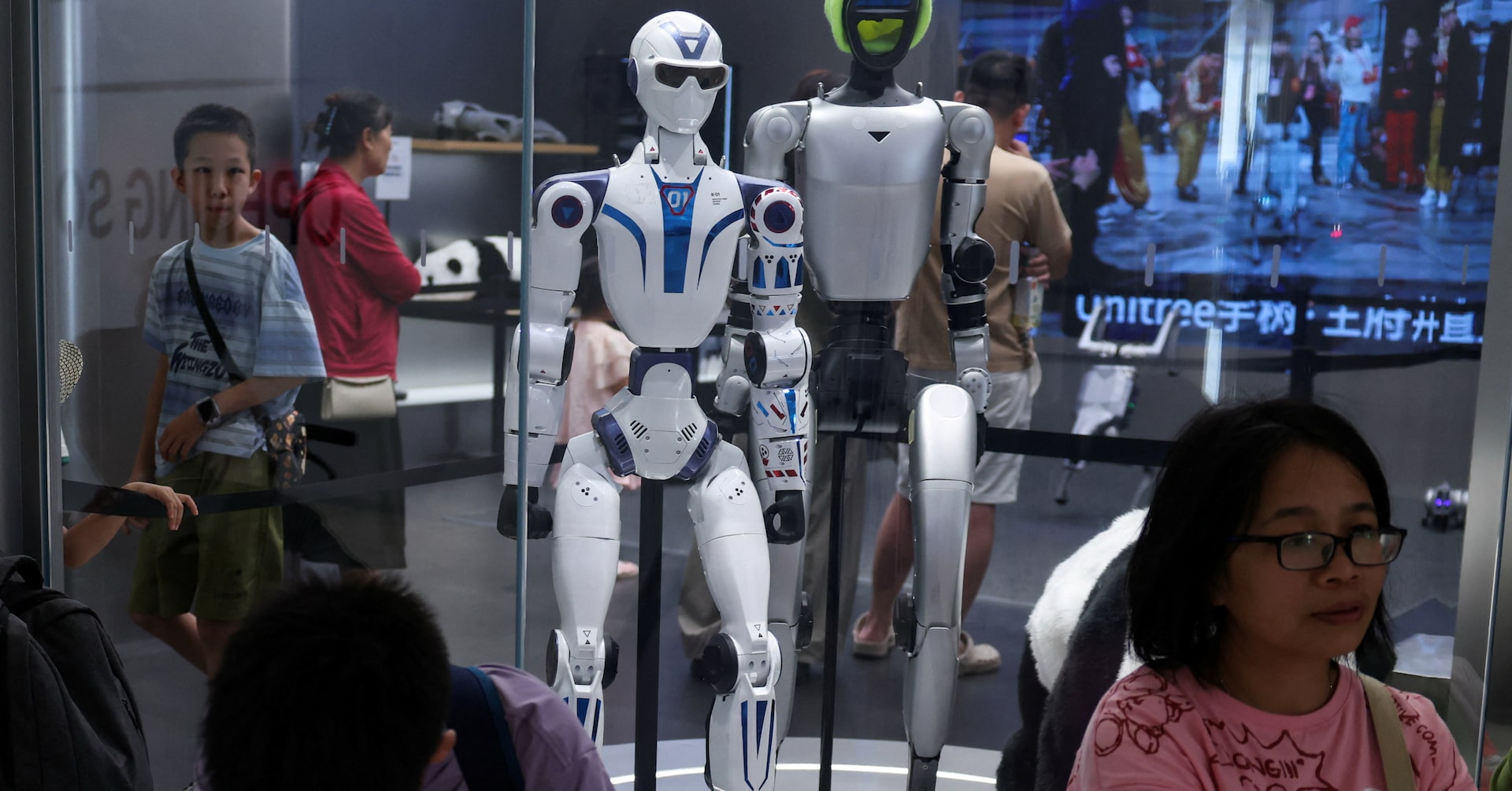
Chinese humanoid robot maker Unitree powers up for stellar Shanghai debut
Read source ↗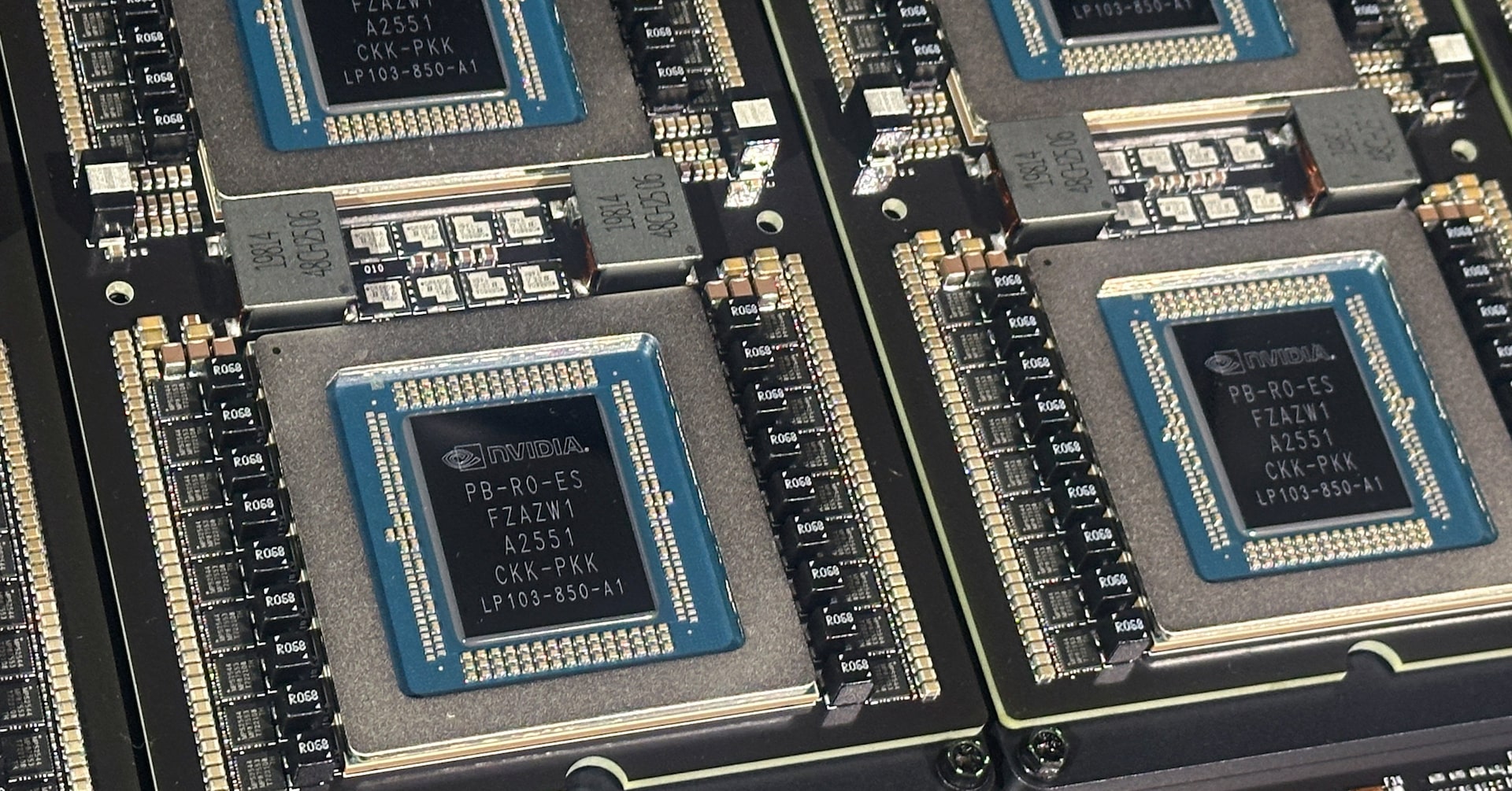
Private credit roundup: Nvidia's half trillion for chips financing, plus others
Read source ↗Sources & qualifications (8)
Sources cited in the original report. Separate verification notes, where present, were added during the archive import.
- AnthropicAnthropic ↗www-cdn.anthropic.com
- Redacted Risk Report August 2026Redacted Risk Report August 2026 ↗Anthropic
- Redacted Risk Report August 2026Redacted Risk Report August 2026 ↗Anthropic
- Redacted Risk Report August 2026Redacted Risk Report August 2026 ↗Anthropic
- AnthropicAnthropic ↗www-cdn.anthropic.com
- AnthropicAnthropic ↗www-cdn.anthropic.com
- Redacted Risk Report August 2026Redacted Risk Report August 2026 ↗Anthropic
- Chinese humanoid robot maker Unitree powers up for stellar Shanghai debut