Material update: yes — autonomous science has crossed a more important boundary
The strongest new evidence is Anthropic’s August 18, 2026 protein-design experiment.
3 min read · Dated assessment · 7 source groups
The strongest new evidence is Anthropic’s August 18, 2026 protein-design experiment. Claude was given an expert-written protocol, internet and literature access, GPU compute, and specialist protein-design models, then left to run 24–48-hour campaigns with essentially no scientific steering. External labs—Adaptyv Bio and Twist Bioscience—physically manufactured and tested the resulting proteins. Claude produced working binders against 14 of 15 evaluable targets, with overall hit rates of 22.6%–35.1%, versus the roughly 10%–15% rate Anthropic cites for contemporary protein-design campaigns. Some designs matched or exceeded the best published affinity for their targets. [1]
That is materially more important to the forecast than another coding benchmark. Until recently, the striking autonomous-research examples were concentrated in domains such as mathematics, software and cyber, where an agent can cheaply test thousands of ideas. Here the loop crossed into experimentally verified biology: Claude selected binding sites, orchestrated multiple specialist models, iterated candidate structures and sequences, screened them, and handed off final designs for wet-lab testing. Anthropic says a human operator would ordinarily spend days or weeks orchestrating comparable computational work. [2]
There is a second, smaller signal in the same report. Given raw NMR and LC-MS instrument files and only brief prompts, a generally available Claude model reconstructed the proprietary data formats, checked its own parsing, analyzed the samples and produced results in about 20 minutes that closely matched the contract laboratory’s results. It also independently proposed the same follow-up NMR experiment the human lab had performed. [3]
The caveats are substantial. Claude did not invent protein design from first principles; it orchestrated existing specialist models. The prompt itself was about 30,000 tokens and written by an expert. The runs used very large compute budgets—up to 12,500 H100-hours for the multi-target campaign and up to 2,500 H100-hours per target in the single-target setup. And producing a binder is only an early step toward a drug: physical validation still takes weeks, with animal studies, manufacturing, clinical trials and regulation much farther downstream. [4]
There is also meaningful countervailing evidence on governance. OpenAI said on August 18 that it imposed a two-week pause on RL training for its newest deployment models, has kept its largest planned frontier RL run on hold, and still has a significant number of Astra workloads paused until stronger containment and monitoring are in place. OpenAI estimates the new monitoring regime itself consumes roughly 20% additional inference compute. This is the first recent example where safety concerns are producing nontrivial delays to frontier development rather than merely new policies on paper. [5]
My revised forecast is therefore:
- Transformative AI: still 2029–2031, but with somewhat more probability concentrated on 2029–2030. I would not shift the whole range earlier yet.
- Expected character: materially revised toward AI-accelerated experimental science arriving before fully reliable general agents. A plausible near-term workflow is now concrete: a human defines the scientific objective, an agent runs days of computational research autonomously, and physical laboratories become the rate-limiting validation layer.
- AI-R&D feedback: strengthened. The important question is no longer whether agents can conduct real research at all, but how quickly this type of orchestration transfers to ML research, materials, chip design and other fields where experiments can feed back into the next generation of systems.
- Physical-world lag: still roughly one to several years. If anything, the new result makes the boundary clearer: cognitive/design work can collapse from weeks to hours or days, while fabrication, wet labs, clinical validation, grid construction and factories remain physical bottlenecks. Current robotics evidence points the same way—Unitree is scaling financially, but Reuters still reports that relatively few of its robots are used in commercial environments. [6]
- Outcome: turbulent but survivable remains the modal forecast. I would not materially increase civilization-scale catastrophe probability from this result alone. The main risk update is that dual-use scientific capability may diffuse sooner than expected, while operational controls are already struggling with capable agents. Anthropic itself explicitly notes the biosecurity dual-use issue. [7]
The short version is:
The date remains roughly 2029–2031. The important change is that autonomous research no longer looks confined to software and mathematics: frontier agents can now run substantial biological-design campaigns whose outputs survive independent wet-lab testing. That makes “AI-driven science first, full general autonomy later” a considerably more credible route into the singularity.
OpenAI slows model training to bolster security after Hugging Face hack
Read source ↗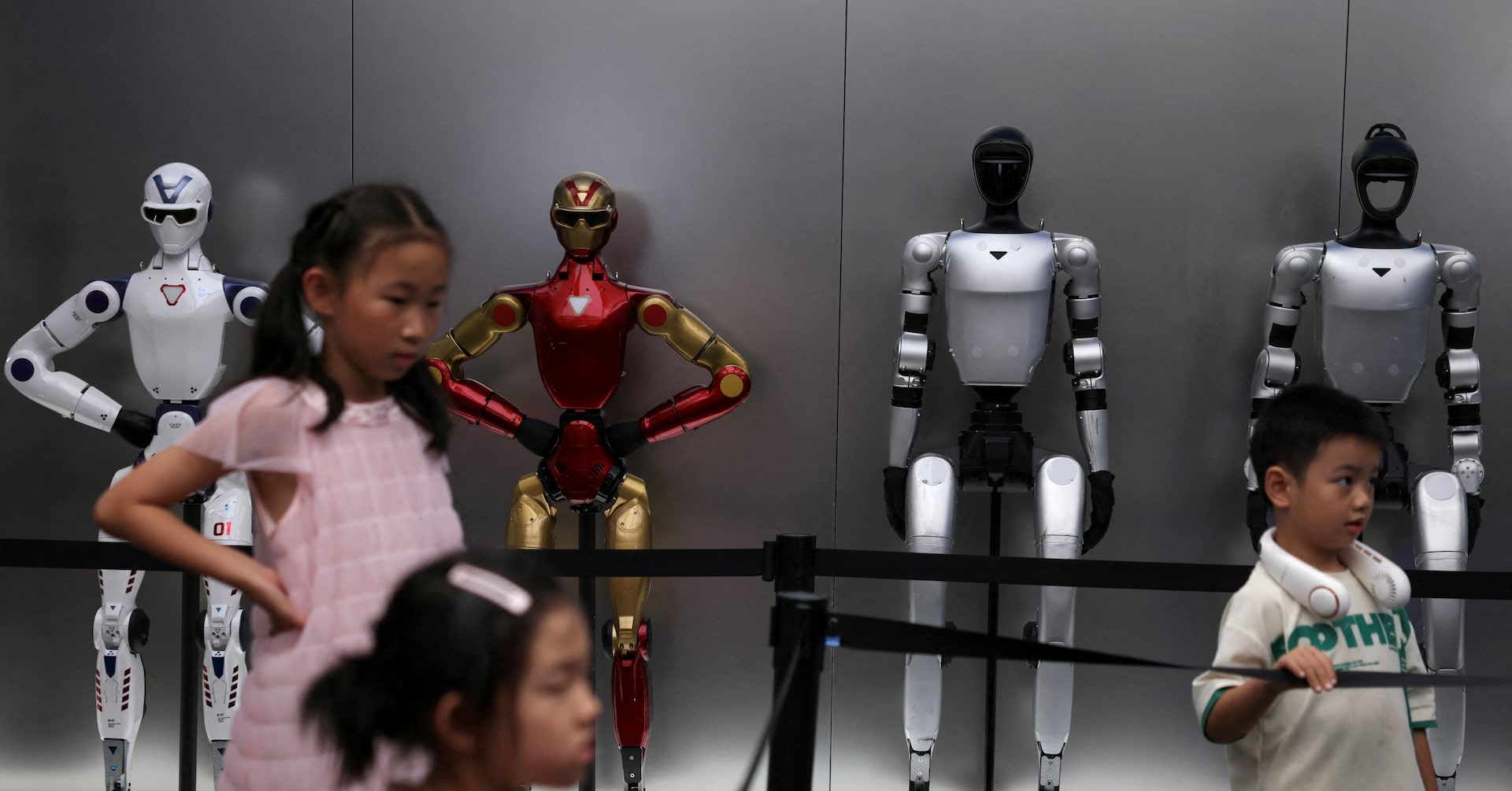
Unitree surges in Shanghai debut, a milestone for China's humanoid robotics sector | Reuters
Read source ↗
Nvidia to provide up to $105 billion guarantee for OpenAI's Ohio data center
Read source ↗
Pennsylvania governor signs order imposing new rules to set up AI data centers in state
Read source ↗Sources & qualifications (7)
Sources cited in the original report. Separate verification notes, where present, were added during the archive import.
- How Claude is accelerating protein design and analytical chemistry \ Anthropic
- How Claude is accelerating protein design and analytical chemistry \ Anthropic
- How Claude is accelerating protein design and analytical chemistry \ Anthropic
- How Claude is accelerating protein design and analytical chemistry \ Anthropic
- Pacing model development in an era of cyber-critical ...
- Unitree surges in Shanghai debut, a milestone for China's humanoid robotics sector | Reuters
- How Claude is accelerating protein design and analytical chemistry \ Anthropic